Act One
The Wrath of Narasimha
When Vishnu descended as Narasimha to destroy the demon-king Hiranyakashipu, his fury grew so catastrophic that even the gods feared total annihilation of the cosmos.
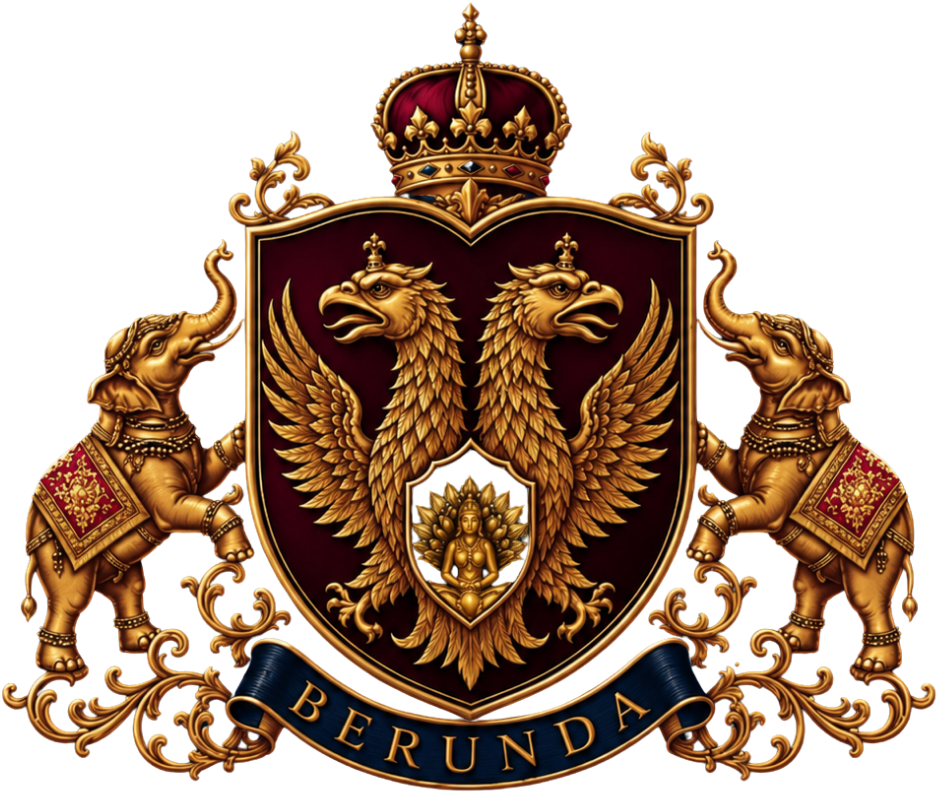
The double-headed eagle — the avatar born to hold back destruction itself.
When Vishnu descended as Narasimha to destroy the demon-king Hiranyakashipu, his fury grew so catastrophic that even the gods feared total annihilation of the cosmos.
Shiva took the form of Sharabha — part-lion, part-bird — to pacify the raging Narasimha and restore the balance of creation.
In answer, Narasimha became the Gandaberunda — a two-headed eagle of supreme and terrifying power. It subdued Sharabha and restored cosmic equilibrium, clutching elephants in both its talons and beaks.
Its two heads signify dual sovereignty — dominion over the earthly realm and over the divine.

Stamped on the gold coins of Achyuta Deva Raya of the Vijayanagara Empire — its formal adoption as an imperial symbol.
Embraced by the Chalukyas, Hoysalas, Keladi Nayakas and Kadambas to assert divine authority and political legitimacy.
Inherited and elevated the symbol — deployed across coins, royal seals and state documents of the kingdom.
Enshrined as the official state emblem of Karnataka, where it appears on every government document and building today.
For Berunda, this is not incidental branding. The Gandaberunda is the founding family's own ancestral emblem — the seal of the house from which this brand descends.